



The symptoms of COPD can be difficult to manage. Shortness of breath, chronic cough, chest discomfort, frequent respiratory infections, and fatigue can have a significant impact on people living with COPD. This can be difficult to deal with on a daily basis, even when taking different medications for the condition.
The aim of the SCALA Study is to find potential future treatment options that may better address these unmet needs.
If you have COPD with chronic bronchitis, you may be eligible to join the SCALA Study. SCALA is evaluating a study drug that is not available to the general public. We hope to learn how well it works to relieve COPD symptoms and what side effects participants may experience.
Participation in the SCALA Study will last for at least 36 weeks (about 8 months). For some participants, the study may last up to 64 weeks (about 15 months). The SCALA Study includes the following steps:
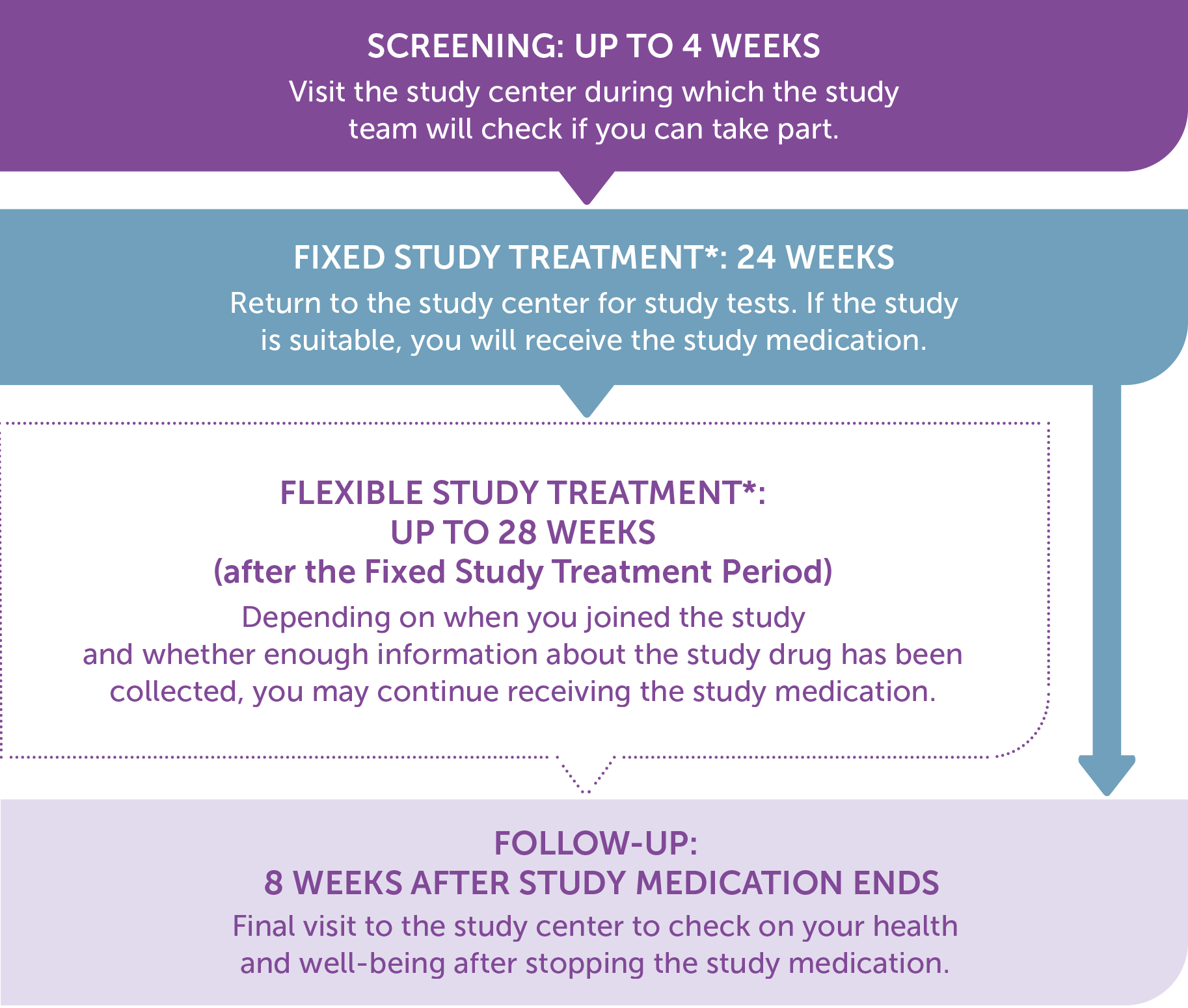
*The study has both a Fixed and a Flexible Study Treatment Period. This is because researchers need to observe a certain number of COPD flare-ups to determine whether the study drug works better than placebo (a placebo looks like the study drug but has no medicinally active ingredients). As a result, people who join the study earlier may receive study medication longer than those who join later. However, everyone receives study medication for a minimum required amount of time during the Fixed Study Treatment Period.
If you think this study may be right for you, you will be assessed by the study team. Everything you need to know about the study will be explained to you. You will be given an Informed Consent Form (ICF), which provides further explanation.
If you agree to participate and sign the ICF, you will have a screening visit at the study center. If you meet all the study criteria, you can proceed in the study and receive the study medication.
The study drug is a type of drug called a biologic. A biologic works by focusing on a specific process in the body that causes illness. Instead of affecting the whole body, it targets the problem more directly.
This study includes the use of a placebo, which looks like the study drug but has no medicinally active ingredients. Placebos are used to measure the effect of the study drug.
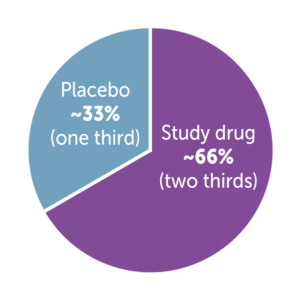
If you meet all the study criteria and participate in the study, you will receive either the study drug or placebo. You cannot choose whether you receive the study drug or placebo, and neither you nor the study team will know which one you are receiving. In an emergency, the study team can find out which one you received.
Two thirds of study participants will receive the study drug and one third will receive placebo. This means you will have around a 66% chance of receiving the study drug and around a 33% chance of receiving placebo.
Both the study drug and placebo are given as a subcutaneous injection under the skin (usually on the lower stomach area, outside of the upper thigh, or upper arm).
During the study, you will be asked to visit the study center to have tests and receive the study drug or placebo on multiple occasions. The purpose of these tests is to check on your health and see how you are responding to the study medication.
Approximately half of the visits will last up to 2.5 hours, and the other half will take approximately 4.5 hours. Reasonable travel and meal expenses may be reimbursed and travel assistance may be offered for you and anyone who needs to accompany you to the study visits.